[Pricing] Appy.AI Pricing: What the Free Entry Actually Gets You
- Free tier: Yes
- Cheapest paid plan: —
- Free quota: Official site entry seen; published free quota / paid plans not filled …
- Last checked: 2026-11-11
Article last updated: 2026-11-18


Appy.AI sells itself as a Slack-based AI coworker. You message “Violet,” described as your Director of AI, and she routes the work to specialist agents — sales, marketing, operations. It is a subscription product with a free entry point. That much the official site states.
What the official site does not state, as of our check, is the number. No published free quota. No published paid plan prices. The pricing page exists at appy.ai/pricing, but the figures are not filled in there. So this piece cannot hand you a tidy table of tiers and dollar amounts, because those numbers are not in the source data. What it can do is tell you exactly what is confirmed, what is missing, and how to decide whether to even start.
That gap is the story. A tool that asks you to route real work through it — sales, marketing, ops — while leaving the cost structure unpublished is a tool you should approach with a specific set of questions. Here they are.
What is actually confirmed about Appy.AI
Three things are solid.
First, there is a free tier. The official site shows a free or trial entry point. That is confirmed.
Second, the billing model is subscription. This is not a pay-as-you-go API product where you top up credits and watch them drain. It is a recurring plan.
Third, the product runs inside Slack. You do not log into a separate dashboard to talk to Violet. You message her where your team already works. She then delegates to specialist agents by function — sales, marketing, operations, and others.
That is the whole confirmed picture. Everything else — how many messages, how many agent runs, how many seats, what each tier costs — is not published in the data we verified.
If you have used other AI agent tools, you know the usual shape: a free tier that caps you at a small number of runs, then tiers that scale by seats or by task volume. Appy.AI may follow that shape. We cannot say it does, because the numbers are not there. Anyone who writes “Appy.AI gives you X free runs” right now is guessing.
Figure: appy.ai official pricing page, captured 2026-11-18.
The missing numbers, and why they matter more here
For a simple writing tool, an unpublished free limit is annoying. For an agent tool, it is a bigger problem.
Here is why. When you ask a chatbot a question, the cost is one exchange. When you ask an agent to handle a sales task, it may plan, call other tools, check a CRM, draft something, revise it, and report back. One request can become many operations behind the scenes. Vendors often meter this with credits — a credit being one unit of agent work, not one message. If the free quota is counted in messages but the paid plan is counted in credits, the two numbers are not comparable, and your sense of “how much do I get” breaks.
Appy.AI has not published which unit it uses. That is the first question to ask before you build any workflow on it.
The second question: seats. This is a Slack product. Slack is a team tool. If the subscription is priced per seat, then a five-person team pays five times whatever the single-seat rate is — and if the rate is unpublished, you cannot budget. If it is priced per workspace, the math is different. We do not know which. The data does not say.
The third question: what happens when the free tier runs out. Does the account stop, does it drop to read-only, or does it silently start billing? For a tool wired into Slack, where a message can trigger real work, the answer matters. You do not want a teammate’s casual request to become a charge.
None of these are gotchas we found. They are simply the things the official page leaves open. Until they are filled in, treat any specific number you see elsewhere with suspicion.
🔍 AMPM exclusive check
We checked the official site and the pricing page on 2026-11-11. The free entry point is real — it is visible. The subscription billing model is stated. The product description matches: Slack-first, Violet as the front, specialist agents behind her.
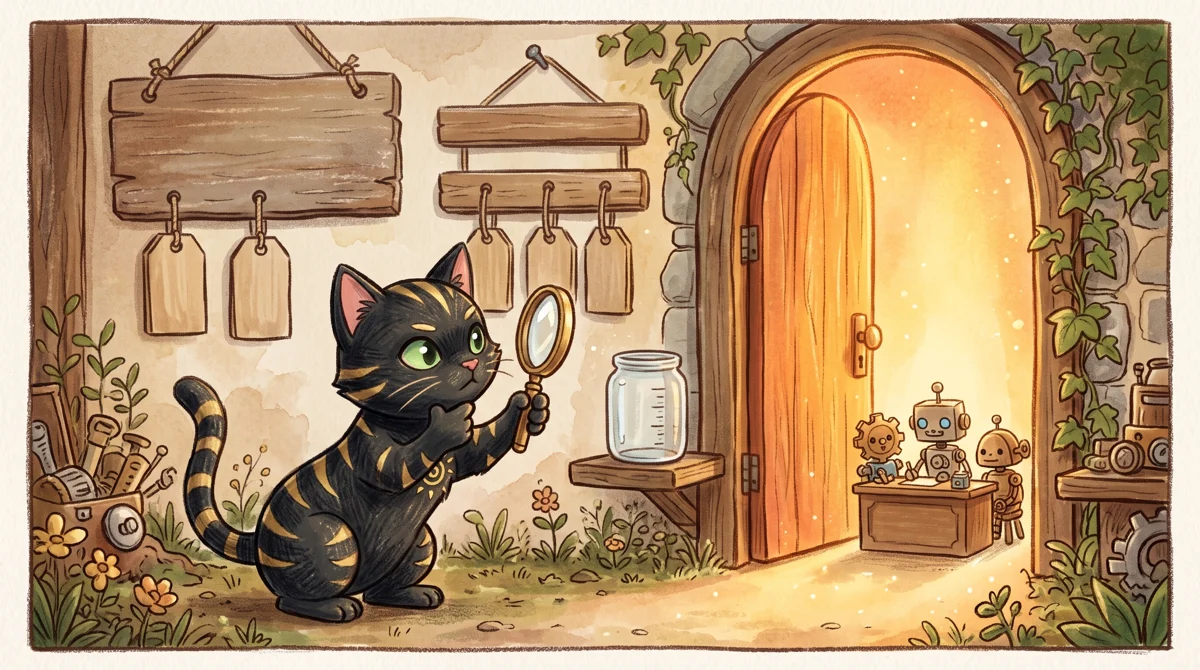
Illustration: While the website opens a welcoming free trial door, its usage limits and subscription prices remain completely blank.
What we could not verify, because it is not published: the free quota, the paid plan names, the paid plan prices, and the billing unit. The pricing page does not carry figures. This is not a case where our check contradicted the vendor. It is a case where the vendor has not published the numbers at all, and we will not invent them to fill a table.
One note on history: an earlier check on 2026-11-05 saw the same thing — an official entry, no quota numbers. The position has not changed between those two dates.
So the honest exclusive here is a negative one. There is no hidden discount, no leaked tier, no quiet price change to report. There is an absence. For a pricing article, an absence is the finding. If Appy.AI publishes its tiers later, the picture changes; as of 2026-11-11, it has not.
Prices vary by country, and we checked from Taiwan. That is the only regional note that applies here, since there are no figures to compare across regions.
☀️ AMO, the budget-minded cat

AMO is our budget-conscious reader. AMO’s rule is simple: free is fine until it isn’t, and paying is only worth it when the free tier blocks real work.
For AMO, Appy.AI is in an awkward spot. There is a free entry, so AMO can start at no cost. Good. But AMO cannot see the ceiling. With most tools, AMO can read the free limit, estimate how long it lasts, and decide in advance whether the paid tier is worth it. Here, the free limit is unpublished. AMO would be walking in without knowing where the floor ends.
That changes AMO’s move. Instead of comparing tiers, AMO should test the free entry directly and watch for the wall. Sign in through Slack, give Violet one real task — not a toy question, an actual piece of work — and see what happens. Does it complete? Does it ask for an upgrade? Does it stop? The behavior at the boundary tells AMO more than any pricing page would, because the pricing page is empty.
Then there is the subscription question. AMO hates recurring charges that are hard to cancel and easy to forget. Appy.AI is a subscription, confirmed. Before AMO pays anything, AMO should know the cancellation path and whether the plan is monthly or annual. The data does not say. If it turns out to be annual-only, that is a bigger commitment than AMO usually wants for an unproven agent. If it is monthly, AMO can try one month and walk.
The verdict for AMO: start free, test the wall, and do not pay until you have hit a limit you can name. If you cannot name the limit, you are not ready to pay — you are just guessing. And guessing is exactly what the missing numbers force you to do.
Verdict: who should use it, who should skip it
Use it if you live in Slack and want to see what an agent coworker feels like without committing money. The free entry lets you do that. Test it with one real task and watch where it stops.
Use it if you are willing to ask the vendor directly for the numbers — free quota, seat count, billing unit, monthly versus annual, cancellation terms. A team that asks those five questions before signing gets a clear answer. A team that signs on vibes gets a surprise.
Skip it if you need to budget now. With no published prices, you cannot forecast cost, and an agent tool without a known ceiling is a line item you cannot defend.
Skip it if your work is sensitive and you have not confirmed where the data goes. The product routes tasks through Slack to agents; the data handling terms are not in what we verified.
The bottom line: Appy.AI is a real product with a real free entry and a real subscription model. What it does not have, as of 2026-11-11, is a published price. That is not a reason to avoid it. It is a reason to ask before you pay.
Written: 2026-11-18 Price last verified: 2026-11-11 Tool last health-checked: 2026-11-11
🔗 Related on AMPM
📎 Sources
All prices and quotas in this article come from AMPM’s verified dataset for Appy.AI (last verified 2026-11-11); primary sources:
🐾 Meet the cats: AMO and PIMI
AMPM is a Taiwan-based AI-tool pricing watchdog. Our motto: ask before you subscribe. Two cats argue every tool from two sides:
- ☀️ AMO — the budget-minded cat. Always asks: is the free tier enough, and is paying actually worth it?
- 🌙 PIMI — the performance-minded cat. Cares about whether it works well, fast, and gets your job done.
When they are done arguing, you know whether to pay. Every number is checked by us, with the verification date at the end.
🐾 Our sister sites also checked
Read next
- Appy.AI Full breakdown: pricing, features and real-world limits
- Appy.AI Alternatives
- Free plan limits for every AI tool we track